Short answer
For emergency HVAC repair in Knoxville, TN, deal with safety first: leave the house for a gas smell or CO alarm, and shut the system off for burning smells or leaks. For no heat or no cooling, protect vulnerable people, then call. After-hours availability and rates vary by contractor, so ask before anyone is sent.
What counts as an HVAC emergency?
An HVAC problem is an emergency when it puts people or the house at risk: no cooling in a heat wave with someone vulnerable at home, no heat during a freeze, a gas smell, a carbon monoxide alarm, a burning smell or smoke, or water leaking from the system toward wiring or ceilings. Most other faults can wait until morning.
Waiting can save you an after-hours rate, so it is worth being honest about which group you are in.
| Situation | Emergency? | First step |
|---|---|---|
| Gas smell near the furnace or water heater | Yes, always | Leave the house, then call the gas utility or 911 from outside |
| Carbon monoxide alarm sounding | Yes, always | Get everyone outside, call 911 from outside |
| Burning smell, smoke or sparks from a unit | Yes | Turn the system off at the thermostat and breaker |
| No cooling, someone at risk from heat | Yes | Move them somewhere cool, then call |
| No heat in freezing weather | Often | Keep one room warm, protect pipes, then call |
| Water dripping from a ceiling vent or air handler | Often | Turn the system off, catch the water, then call |
| System noisy but still heating or cooling | Usually not | Book a daytime visit |
What should I do first if I smell gas or a CO alarm goes off?
Leave the house with everyone, including pets, and call from outside. For a gas smell, call your gas utility or 911. For a carbon monoxide alarm, call 911. Do not flip light switches, start a car in an attached garage, or go back inside to look for the cause.
These are safety calls first and repair calls second. Once the fire department or utility has cleared the house, an emergency HVAC repair contractor can find and fix the fault. Do not run the furnace again until it has been checked.
When is a broken AC an emergency in Knoxville?
A broken AC is an emergency when someone in the home is at risk from heat: older adults, infants, people with heart or breathing conditions, or pets. Knoxville averages 36 days a year at 90 F or hotter, and the record high is 105 F, so summer outages can turn dangerous quickly.
For emergency AC repair, run the quick checks first: thermostat on Cool, breakers on, filter clear. If the outdoor unit hums without the fan turning, or you smell burning, switch the system off rather than letting it keep trying. Our AC repair guide covers the common causes in more detail.
When is no heat an emergency?
No heat is urgent when indoor temperatures are dropping toward unsafe levels for the people inside, or when pipes are at risk of freezing. Knoxville averages 5 days a year where the high stays at or below freezing, and the record low is -24 F. Cold snaps are short, but they are when furnaces fail.
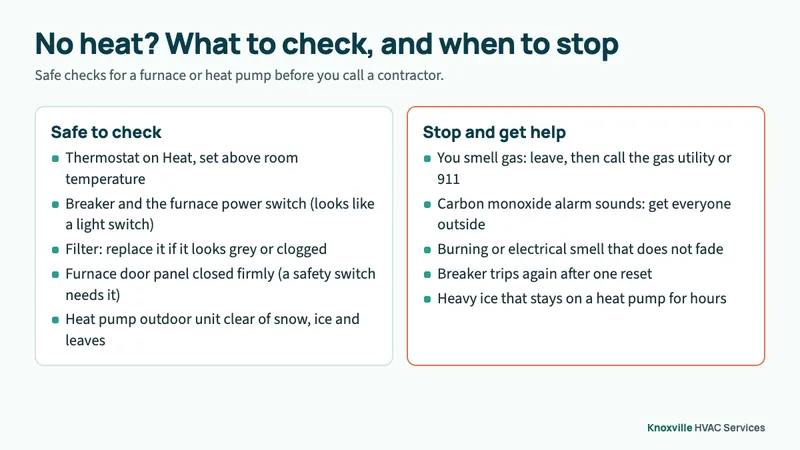
Check the thermostat, the breaker, the furnace service switch and the filter before calling. If you have a heat pump, an emergency heat setting on the thermostat may switch to backup heat while you wait. Our heating and furnace repair guide explains the safe checks step by step.
What can I do while I wait for an HVAC technician?
Keep people safe first, then protect the house. In summer, move vulnerable people to the coolest room or a cooler building, close blinds, and use fans if the air is not too hot. In winter, close off unused rooms, gather in one warm room, and let faucets on outside walls drip if pipes could freeze.
- Summer. Drink water, avoid using the oven, and check on older neighbors. Do not leave pets in a closed, hot room.
- Winter. Use space heaters only as the maker directs, with clear space around them. Never heat a home with a gas oven, a grill or a generator indoors.
- Water leaks. Turn the system off, set out a bucket and towels, and keep water away from outlets.
- Information. Note what the system did before it stopped. The technician will ask.
What information should I have ready when I call?
Have your ZIP code, the type of system, what it is doing, and when it started. Say whether anyone in the home is at risk from heat or cold, and mention any smells, sparks, ice or water. This helps the contractor judge how urgent the call is and what parts to bring.
- System type. Heat pump, gas furnace, central AC, or a heat pump with a gas furnace backup.
- Age and brand. Both are on the label inside the furnace door or on the side of the outdoor unit.
- What you checked. Thermostat, breakers, filter and service switch, and what you saw.
- Access. Whether the indoor unit is in an attic, a crawl space, a closet or a basement.
Write down the name of the business you speak to, so you can look up its license later.
Is 24-hour HVAC repair available in Knoxville?
Some contractors take after-hours and weekend calls, and some do not. Whether 24-hour HVAC repair is available in Knoxville, TN on a given night depends on the contractor and how busy they are. After-hours rates also vary by contractor, so ask before anyone is sent out.
When you call the number on this site, you are connected with an independent HVAC contractor who takes calls for your area, when one is available. We do not set their hours, fees or arrival times. See how referrals work for the details.
What should I ask on an after-hours HVAC call?
Ask four things before you agree to a visit: whether there is an after-hours or weekend fee, whether the diagnostic fee is credited toward the repair, roughly when the technician can arrive, and whether the fix can be done that night or will need a part. Get the price in writing, even on an emergency call.
- What is the after-hours trip or diagnostic fee, and does it differ on weekends?
- Can a temporary fix get heat or cooling back tonight, with the full repair in daytime hours?
- Is the business licensed in Tennessee? You can check with the free Verify a License tool.
- What warranty comes with the parts and the labor?
ENERGY STAR advises getting written, itemized estimates and signing a written proposal before work starts. That advice still holds at night.
Should I agree to a new system during an emergency call?
Try not to. Replacing a system is a big decision, and an emergency is a poor moment to make it. Ask for a temporary repair if one is possible, then get written quotes in daylight. ENERGY STAR suggests weighing replacement when a heat pump or AC is more than 10 years old, or a furnace more than 15 years old.
If replacement is the only option, ask how the new system will be sized. ENERGY STAR notes that oversized equipment may cycle too often and wear out sooner. Our replacement guide covers what a good quote includes.
How can I avoid an HVAC emergency next season?
Most emergencies start as small problems found too late. ENERGY STAR recommends a cooling check-up in spring and a heating check-up in fall, before contractors get busy, and changing filters monthly during heavy use. Install carbon monoxide alarms if you have any gas appliance.
A check-up usually covers electrical connections, moving parts, the condensate drain and refrigerant level. See our HVAC maintenance guide for the full list, and the heat pump guide if your home relies on one for winter heat.
Sources: ENERGY STAR maintenance checklist, ENERGY STAR replacement guide, ENERGY STAR hiring tips, ENERGY STAR quality installation, Tennessee Board for Licensing Contractors, Knoxville climate normals via Wikipedia.